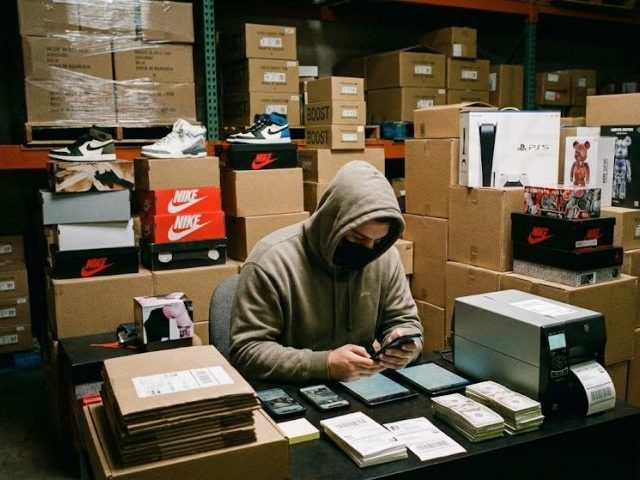
Have you ever tried to buy a popular Japanese product, only to discover that it was sold out everywhere but available online at a much higher price? In Japan, people who profit from this practice are often called tenbaiya (転売ヤー).
From video game consoles and limited-edition merchandise to concert tickets and trading cards, reselling has become a controversial issue in Japan. Although similar problems exist worldwide, the term tenbaiya frequently appears in Japanese news reports and online discussions.
Why do these resellers attract so much criticism? And is reselling actually illegal in Japan? Let’s explore the meaning of tenbaiya, the cultural concerns surrounding it, and the measures being taken to address the problem.
What Is Tenbaiya?
Tenbaiya (転売ヤー) is a Japanese slang term for people who purchase products primarily to resell them for profit, especially when those products are in short supply. The term is related to tenbai (転売), meaning “resale,” and is also associated with the expression tenbai-ya (転売屋), meaning “reseller.”
The term usually has a negative connotation. Unlike someone selling their old belongings, a tenbaiya typically buys sought-after products with the intention of charging other consumers higher prices.
Some resellers purchase multiple items, use several accounts, or exploit limited sales opportunities. However, buying large quantities is not necessary for someone to be criticized as a tenbaiya. Even reselling a single scarce product at a significantly inflated price can attract criticism.
In English, “scalper” is often the closest equivalent, particularly when discussing tickets or products in high demand.
Why Is Reselling So Controversial in Japan?
Reselling itself is not unique to Japan, and neither is criticism of scalping. However, the tenbaiya problem has become closely connected with discussions about fairness, consumer trust, and fan communities.
1. Fairness and Equal Opportunities
One major concern is fairness, or kōhei (公平) in Japanese. When popular products are released in limited quantities, many customers expect to have a reasonable opportunity to purchase them at the official retail price.
If resellers obtain large numbers of products and immediately offer them at inflated prices, ordinary customers may feel that they have lost a fair chance to buy something they genuinely wanted.
The frustration is not simply about people making money. It is also about purchasing opportunities being reduced by people whose primary motivation is resale profit. Similar concerns exist internationally, but they are especially visible in Japanese discussions about limited-edition products.
2. Trust Between Companies and Customers
Japanese manufacturers and retailers often invest considerable effort in customer service and maintaining long-term relationships with consumers. However, popular product launches can create difficulties when demand exceeds available supply.
Manufacturers must consider production capacity, costs, and demand forecasts when deciding how many products to sell. Even careful planning cannot guarantee that every customer will be able to purchase a popular item.
Resellers can make shortages more frustrating by purchasing products that might otherwise reach ordinary consumers. Companies may respond with lottery systems, purchase limits, or identity verification, although these measures cannot completely eliminate speculative reselling.
3. Fan Culture and Emotional Value
Many products targeted by resellers have special meaning for fans. Limited-edition figures, trading cards, concert merchandise, and exclusive collectibles are often connected with people’s favorite artists, characters, or hobbies.
For dedicated fans, these items represent more than their monetary value. When products sell out immediately and reappear online at much higher prices, some fans feel that their enthusiasm is being exploited.
This helps explain why tenbaiya are frequently criticized within Japanese fan communities. The conflict is not necessarily between fans and non-fans, but between people who want to enjoy a product and those who prioritize resale profits.
What Products Do Tenbaiya Target?
Products that attract strong demand but have limited availability are especially vulnerable to speculative reselling. Common examples include:
- Video game consoles: New systems and limited-edition hardware.
- Trading cards: Rare Pokémon cards and other collectible cards.
- Concert tickets: Popular performances with limited seating.
- Anime merchandise: Exclusive figures, character goods, and event products.
- Sneakers and fashion: Limited releases and collaborations.
Not every expensive resale listing is necessarily an example of harmful scalping. Rare collectibles can legitimately increase in value over time. The controversy is particularly strong when newly released products become difficult to purchase because people acquire them primarily for immediate resale.
Is Reselling Illegal in Japan?
Reselling products at a higher price is not automatically illegal in Japan. However, certain products and business activities are subject to legal restrictions.
Ticket Resale Restrictions
Japan’s Ticket Resale Prohibition Act came into effect on June 14, 2019. It prohibits the unauthorized resale of certain qualifying event tickets at prices above their original selling prices when conducted with the intention of reselling tickets repeatedly as a business.
The law applies only to tickets that meet specific legal requirements, such as designated seats or admission holders and clearly stated resale restrictions. It does not apply to every ticket or every resale transaction.
Secondhand Dealer Licenses
Businesses that buy and resell secondhand goods may need a secondhand dealer license (kobutsushō kyoka, 古物商許可) under Japan’s Secondhand Articles Dealer Act. However, individuals generally do not need this license simply to sell their own used belongings.
Whether a license is required depends on the nature of the activity, not merely on whether an item is sold online.
Legal Does Not Always Mean Acceptable
An important distinction is that behavior described as tenbaiya is not necessarily illegal. A transaction may be permitted under Japanese law while still attracting criticism from consumers.
Online marketplaces may also establish their own restrictions, meaning a listing can violate platform rules even if the underlying resale is not prohibited by law.
How Are Japanese Companies Fighting Scalping?
Manufacturers, retailers, and online platforms have introduced various measures to reduce speculative reselling.
Common approaches include lottery sales, which distribute purchasing opportunities through random selection, and purchase limits, which restrict how many items one customer can buy. Some sellers also use identity verification, account requirements, or anti-bot systems to discourage bulk purchasing.
Online marketplaces may remove suspicious listings or temporarily restrict the resale of particular products. During the Nintendo Switch 2 launch, for example, Nintendo cooperated with major Japanese marketplace operators on measures against unauthorized listings.
However, no single method can completely eliminate scalping. Resellers may adapt their methods, while strict purchasing requirements can also inconvenience legitimate customers.
How Can Consumers Avoid Resellers?
For consumers, the safest approach is generally to purchase popular products through manufacturers, authorized retailers, or official ticketing services.
Before paying a higher resale price, check whether additional stock, lottery sales, or official resale opportunities are available. Be particularly cautious with unfamiliar sellers, unusually expensive listings, and products offered before their official release dates.
For event tickets, always check the organizer’s transfer and resale rules. Buying an unauthorized ticket may result in problems entering the venue, even if the ticket appears genuine.
FAQ
What Does Tenbaiya Mean in English?
Tenbaiya generally refers to a reseller or scalper who buys products primarily to sell them at higher prices. The term usually carries a negative meaning, especially when popular products become difficult for ordinary customers to obtain.
Is Scalping Illegal in Japan?
Not all scalping is illegal. Certain unauthorized ticket resales are prohibited, and some resale businesses require licenses. Other transactions may be legal but violate marketplace rules or attract public criticism.
Is Selling Used Goods Considered Tenbaiya?
Usually not. Selling your own unwanted belongings is generally different from purchasing scarce products specifically to resell them for profit. The term tenbaiya is most often used critically when resale activities make popular products less accessible.
Conclusion
The tenbaiya problem illustrates the tension between profit-driven resale and consumers’ desire for fair access to popular products.
In Japan, criticism of scalping is closely connected with concerns about fairness, trust, and the emotional value of products within fan communities. However, these concerns are not uniquely Japanese, and not every form of resale is harmful or illegal.
Manufacturers and retailers continue experimenting with lotteries, purchase limits, and online marketplace restrictions, but preventing speculative reselling remains difficult when demand greatly exceeds supply.
Understanding the term tenbaiya offers a useful glimpse into Japanese consumer culture and the challenges surrounding limited-edition products in today’s online marketplace.