Rice is one of the most familiar foods in Japan. Whether served with grilled fish, curry, or a simple bowl of miso soup, it has been a central part of Japanese meals for generations. But beginning in 2024, Japan experienced an unusual rice shortage and a dramatic increase in prices. Supermarket shelves sometimes ran low, households faced higher grocery bills, and the government eventually released rice from its emergency stockpiles.
By May 2025, the average retail price of rice had reached approximately ¥4,238 for a five-kilogram bag, almost double the ¥2,122 recorded a year earlier, according to Japan’s Ministry of Agriculture, Forestry and Fisheries (MAFF). The situation became widely known as the Reiwa no Kome Sōdō (令和の米騒動), or the “Reiwa Rice Uproar.”
Why did a country famous for rice cultivation struggle to keep its most important staple food affordable? And what does the crisis reveal about Japanese agriculture and food culture?
Why Rice Is More Than Just Food in Japan
Rice, known as kome (米) in Japanese, has played an important role in the country’s history, economy, and culture. Although Japanese people also eat bread, noodles, and many other foods, rice remains a central part of traditional meals and everyday home cooking. Its importance goes beyond nutrition.
Rice and Japanese History
Rice cultivation has been practiced in Japan for thousands of years. Historically, rice production influenced land use, taxation, agricultural communities, and political power. During the Edo period (1603–1868), rice was also used as an important measure of economic wealth.
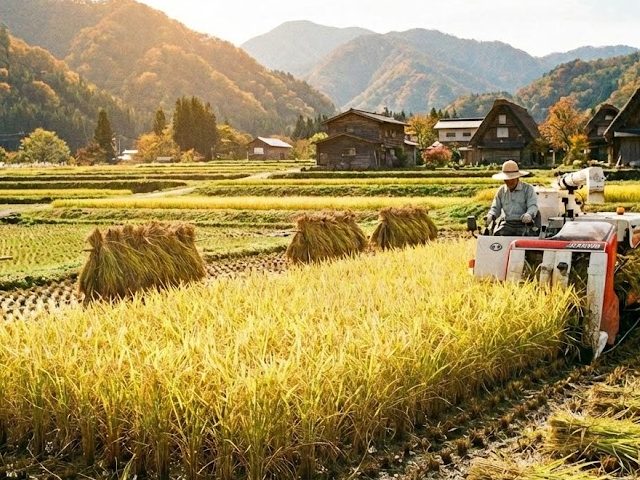
Rice farming often required cooperation among local communities, particularly in managing irrigation systems and agricultural work. Seasonal activities such as planting and harvesting also became connected with local festivals, religious traditions, and celebrations. Even today, rice fields remain a familiar part of the landscape in many rural areas of Japan.
Rice and Washoku
Rice is also closely connected with washoku (和食), Japan’s traditional food culture. In 2013, UNESCO inscribed washoku, Japan’s traditional dietary cultures, on its Representative List of the Intangible Cultural Heritage of Humanity. The recognition concerns traditional knowledge, practices, and customs surrounding food, rather than simply a collection of individual dishes.
A typical Japanese-style meal may include rice, soup, vegetables, fish, and other side dishes. Rice often serves as the foundation of the meal, complementing the flavors of the other foods.
Rice and Household Budgets
For many Japanese households, rice is a regularly purchased necessity. A sudden increase in its price can therefore have a noticeable effect on everyday spending. The impact is especially significant for families that consume large quantities of rice, as well as restaurants, school meal providers, and other businesses that depend on a stable supply.
This helps explain why the price surge became such a widely discussed national issue.
What Was the “Reiwa Rice Uproar”?
The phrase Reiwa no Kome Sōdō (令和の米騒動) refers to the rice shortages and price increases that attracted widespread attention beginning in 2024. Reiwa is the name of Japan’s current imperial era, which began in 2019. Kome means rice, while sōdō refers to a disturbance, commotion, or uproar.
The expression deliberately recalls Japan’s historical rice riots, particularly those of 1918, when rising rice prices contributed to widespread protests and unrest. However, the modern “Reiwa Rice Uproar” does not refer to a comparable nationwide wave of violent riots. Instead, it describes public anxiety over rice shortages, rising prices, and uncertainty about the country’s food supply.
What Happened in 2024?
During the summer of 2024, rice became difficult to find at some supermarkets. The situation was especially noticeable before the new rice harvest reached stores. Private rice inventories had already been declining, leaving the market vulnerable to unexpected increases in demand.
Consumer purchasing also increased temporarily following natural disasters and warnings about possible earthquakes, including a major earthquake advisory issued in August 2024. These developments contributed to shortages on store shelves and heightened public concern. Although the arrival of newly harvested rice helped improve physical availability, prices continued to rise.
How Expensive Did Rice Become?
The scale of the price increase was remarkable. According to MAFF’s monthly supermarket point-of-sale (POS) data, the average retail price of a five-kilogram bag of rice rose from ¥2,122 in May 2024 to ¥4,238 in May 2025.
| Period | Average retail price for 5 kg |
|---|---|
| May 2024 | ¥2,122 |
| May 2025 | ¥4,238 |
Source: Ministry of Agriculture, Forestry and Fisheries (MAFF), monthly supermarket POS data. Prices include tax.
In other words, the price almost doubled within a year, increasing by approximately 99.7%. For households accustomed to buying rice regularly, the increase represented a substantial additional expense.
Why Did Rice Prices Rise So Sharply?
There was no single cause behind Japan’s rice price crisis. Weather conditions, inaccurate demand forecasts, declining inventories, distribution problems, and agricultural challenges all played a role.
1. Extreme Heat Affected Rice Quality
Japan experienced exceptionally hot weather in the summer of 2023. High temperatures affected rice quality in some producing regions, including the appearance and condition of harvested grains. Heat damage can also reduce the amount of marketable white rice obtained from harvested brown rice during milling.
This matters because the total weight of harvested rice does not necessarily equal the amount of usable white rice available to consumers. However, the hot weather was only one contributing factor. It would be misleading to explain the entire crisis as a simple result of poor harvests.
2. Rice Demand Was Higher Than Expected
For many years, rice consumption in Japan generally declined as the population changed and eating habits diversified. Government forecasts were based partly on the expectation that this long-term decline would continue.
However, actual demand was stronger than government forecasts had anticipated, partly because of increased household purchases and consumption associated with inbound tourism. At the same time, lower milling yields meant that more brown rice was needed to produce the same amount of edible white rice.
Together, these factors contributed to a gap between expected and actual supply-and-demand conditions. In its subsequent review, MAFF identified inaccurate demand forecasting as an important factor behind the crisis.
3. Rice Inventories Declined
When rice production fails to keep pace with demand, inventories can gradually shrink. This happened in Japan before the shortages became widely visible in 2024. As available stocks decreased, wholesalers and other businesses became increasingly concerned about securing enough rice.
Competition to purchase rice intensified, and some businesses turned to alternative suppliers or higher-priced transactions. This purchasing competition contributed to rising wholesale prices, which eventually affected retail prices.
The problem was therefore not simply that rice had disappeared from Japan. It was also that the amount of rice available through established distribution channels had become insufficient relative to demand.
4. Rising Agricultural Production Costs
Japanese rice farmers have also faced rising costs. Fertilizer, fuel, agricultural machinery, and other materials can represent significant expenses. Labor shortages and the costs of maintaining farmland and equipment create additional challenges.
These pressures affect the long-term sustainability of rice farming. However, rising production costs should be distinguished from the immediate supply-and-demand problems that triggered the sharp price increase in 2024–2025. Both are important, but they operate in different ways.
5. Long-Term Agricultural Policies and an Aging Farming Population
Japan has a long history of policies intended to balance rice production with demand. Beginning in 1970, the government introduced measures to discourage excessive rice production and prevent oversupply. These policies are commonly associated with gentan (減反), or rice acreage reduction.
In 2018, the government ended its direct allocation of rice production quantity targets to farmers. However, agricultural support programs and incentives for growing alternative crops have continued to influence planting decisions.
At the same time, Japan’s agricultural workforce has been aging, and many rural communities face difficulties attracting younger farmers. These structural challenges did not cause the rice shortage overnight, but they help explain why maintaining a stable and flexible agricultural production system remains difficult.
The extent to which Japan’s long-standing rice production policies contributed to the crisis remains a subject of debate. Some agricultural economists argue that production controls left the market with too little flexibility to respond to unexpected demand, while government reviews have emphasized a combination of forecasting errors, declining inventories, and distribution problems.
6. Delays in Recognizing and Responding to the Shortage
Government responses also became an important part of the debate. MAFF later acknowledged that its understanding of actual supply-and-demand conditions had been insufficient. Officials had continued to believe that rice production was broadly adequate, even as inventories declined and competition for supplies intensified.
The government was also slow to release rice from its emergency reserves. These delays contributed to uncertainty in the market and made it more difficult to ease concerns about future supplies.
How Did the Japanese Government Respond?
Japan maintains emergency rice stockpiles to prepare for supply disruptions. As the crisis continued, the government began releasing some of these reserves into the market in 2025.
The Initial Stockpile Releases
In March and April 2025, approximately 310,000 metric tons of government stockpiled rice were sold through three rounds of auctions, mainly to rice collection businesses. However, the amount sold at auction was not the same as the amount that immediately reached retailers and consumers.
Distribution was slow. By early May 2025, only about 10% of the auctioned rice had reached retailers and food-service businesses, limiting its immediate impact on supermarket availability and consumer prices.
Direct Sales to Retailers
Beginning on May 26, 2025, the government introduced a different approach. Instead of relying only on auctions through established distribution channels, it began accepting applications for negotiated contracts to sell stockpiled rice directly to retailers and other eligible businesses.
The government initially announced plans to make approximately 300,000 metric tons available through this approach, with substantial quantities subsequently sold under negotiated contracts. The aim was to distribute rice more quickly and offer consumers lower-priced options.
These measures helped increase the availability of government stockpiled rice, although the broader price situation remained complicated. The crisis also raised questions about how Japan should manage emergency reserves and respond to unexpected changes in food demand.
Did Japan Start Importing More Rice?
Japan produces most of the rice consumed domestically, and domestic rice varieties have a strong presence in supermarkets and restaurants. However, the sharp increase in prices encouraged greater interest in imported rice.
Some businesses and consumers began considering foreign-grown rice as an alternative. American rice, including California-grown medium-grain varieties, attracted particular attention. Japan already had an established system for importing certain quantities of rice under international trade arrangements.
However, the price crisis also encouraged additional commercial imports, despite the high tariffs that generally apply to rice imported outside those arrangements. Imported rice was not a complete replacement for domestic production, but the increased interest showed how strongly higher prices could influence purchasing decisions.
What Happened After the 2025 Price Surge?
The rice crisis did not end immediately when government stockpiles were released. Although Japan secured sufficient production from the 2025 harvest to meet estimated demand, retail prices remained elevated for some time. Competition among rice buyers and high procurement costs contributed to the persistence of higher prices.
During 2026, however, rice prices declined significantly. According to MAFF’s supermarket sales data released on November 6, 2026, the average price was ¥2,816 per five kilograms for the week of October 26 to November 1, approximately 33.5% lower than the same period a year earlier. The figure represented a slight increase from the previous week but remained below ¥3,000 for the eighth consecutive week.
These figures reflect the average prices of rice actually sold at approximately 1,000 supermarkets nationwide, including different varieties and blended rice products. They are not necessarily the prices consumers will find for every brand or at every store.
The decline provided some relief for households, but the crisis continued to raise questions about agricultural policy, price stability, and sustainable incomes for rice farmers. The experience also highlighted the difficulty of balancing stable supplies, affordable consumer prices, and a financially sustainable domestic rice industry.
What Does the Rice Crisis Mean for Japan’s Future?
The rice price crisis revealed several challenges that extend beyond the price of a single food.
Finding a Balance Between Farmers and Consumers
Rice farming needs to provide a sustainable income for producers. At the same time, households and food businesses need access to affordable rice. These goals can sometimes conflict.
If prices are too low, farmers may struggle to cover their expenses and invest in future production. If prices rise too sharply, consumers may reduce purchases or switch to alternatives. Finding a workable balance is therefore an important challenge for Japan’s agricultural policy.
Improving Supply and Demand Forecasts
One of the major lessons of the crisis was the importance of accurate information. Government agencies, farmers, wholesalers, and retailers all depend on reliable estimates of production, consumption, and available inventories.
Better forecasting and faster information sharing could help prevent future shortages from becoming more serious.
Supporting the Next Generation of Farmers
Japan’s aging agricultural workforce is another long-term concern. Maintaining rice production will require efforts to improve productivity, encourage new farmers, and make agricultural businesses financially sustainable.
Technology, larger-scale farming operations, and more efficient production methods may all play a role. However, the needs of farming communities vary considerably across the country.
Protecting a Familiar Part of Japanese Life
Rice is deeply connected with Japanese cuisine, seasonal traditions, and everyday meals. Changes in its price and availability can therefore feel more significant than ordinary fluctuations in grocery costs.
Nevertheless, Japanese food culture has always evolved. Consumers may experiment with different rice varieties, imported products, or alternative staple foods while continuing to value rice as an important part of their culinary traditions.
Conclusion
Japan’s rice price crisis of 2024–2025 was not caused by a single poor harvest or one government policy. It resulted from a combination of factors, including heat-related quality problems, stronger-than-expected demand, declining inventories, competition in rice distribution, and delays in responding to changing market conditions.
Long-term challenges such as rising farming costs, an aging agricultural workforce, and the legacy of production policies added further complexity. The government’s release of emergency stockpiles in 2025 demonstrated how seriously the shortage had affected the country.
Although rice prices declined significantly during 2026, the experience exposed weaknesses in Japan’s food supply system and raised important questions about how the country should prepare for future disruptions.
For Japan, rice is not merely another agricultural product. It is closely connected with history, food culture, rural communities, and daily life. The crisis highlighted the importance of ensuring that this essential food remains both affordable for consumers and economically sustainable for the people who produce it.