A Japanese school lunch is often more than a meal delivered to a cafeteria. In many elementary schools, students help serve food, eat with classmates in their own classroom, and learn about nutrition and food traditions along the way. These lunches are called kyūshoku (給食), and their details can vary by school, age group, and region. A typical meal might combine rice or bread, a main dish, vegetables or soup, and milk—but there is no single menu followed everywhere. For international visitors, Japanese school lunch culture offers a window into everyday life: how schools organize shared responsibilities, introduce local foods, and connect eating with learning. Here is how the system works, what students may eat, and what to know about its history and customs.
What Is Kyūshoku?
Kyūshoku means a meal provided by an institution, and in schools it usually refers to a planned lunch served during the school day. It is distinct from bentō (弁当), a packed lunch brought from home. Some Japanese schools provide lunch on site or through a central kitchen; others, depending on the school and local arrangements, may have students bring a bentō or offer another option.
School lunch is especially associated with elementary schools, where it commonly forms part of the daily routine. Junior high school arrangements differ across Japan: some schools provide kyūshoku, while others use bentō or another system. High schools are more varied still. It is therefore better to think of kyūshoku as an important part of Japanese school life, not a universal experience for every student.
What Is Served in a Japanese School Lunch?
Many menus follow a familiar pattern: a staple food, a main dish, a side dish or soup, and a drink. The exact combination changes from day to day and school to school.
Rice, bread, and noodles
Rice is a frequent staple, served plain or as part of a dish. Bread also appears on some menus, and noodles may be served in soup or as a separate dish. The balance depends on local planning and the school’s meal schedule; not every school follows the same weekly pattern.
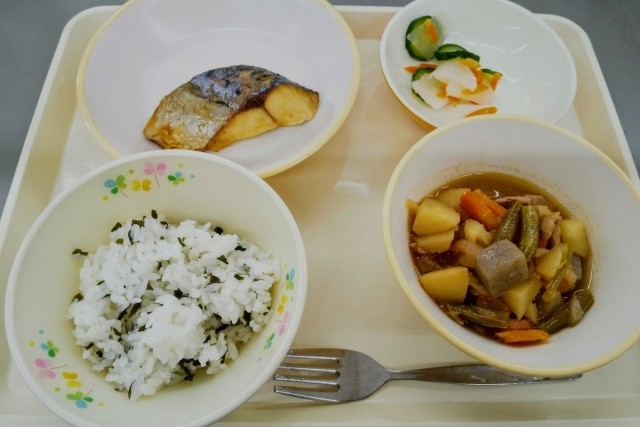
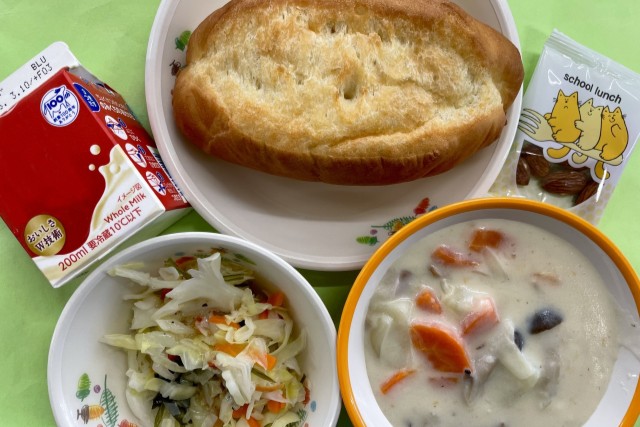
A rice-based meal might include rice, grilled fish or a meat dish, vegetables, soup, and milk. Another day might feature bread, a stew, and a salad. These examples illustrate common combinations, not a fixed national menu.
Main dishes, vegetables, and milk
Menus may include fish, chicken, pork, tofu, eggs, beans, and a range of vegetables. Soups and stews are common ways to serve seasonal produce. Milk is a familiar part of many school lunches, though details of the menu and provision can vary.
The food is generally planned with children’s nutrition in mind, but that does not mean every meal looks or tastes the same. Local ingredients, school facilities, budget, dietary needs, and regional preferences all influence what is served.
Regional and seasonal foods
Some schools use lunch to introduce ingredients or dishes associated with their area. A menu might highlight a locally grown vegetable, a regional fish, or a dish connected with a seasonal event. Schools may also arrange themed meals, such as a menu featuring food from another country.
These occasions can make lunch a practical way to explore geography and food culture. Students encounter not only familiar staples but also flavors and ingredients that may be new to them. How often this happens, and how elaborate the menus are, differs from place to place.
How a School Lunch Usually Works
At many elementary schools, lunch is served in the classroom rather than in a separate cafeteria. After the lesson before lunch, students may help move food from a kitchen or serving area, set out dishes, and distribute portions. The students assigned to help are often called kyūshoku tōban (給食当番), or lunch-duty students.
A typical routine might involve changing into aprons and caps, washing hands, carrying food carefully, and making sure everyone receives a portion. Students then eat together. In some schools, teachers join them; the arrangements are not identical everywhere.
This routine gives students a role in the meal rather than making them only recipients of a service. It also requires cooperation: the food has to be carried, shared, and cleaned up safely. These responsibilities are part of the lunch experience, though practices and expectations vary by school.
Students may serve themselves or receive portions from the lunch-duty group, depending on the school’s system. There may also be rules about reducing waste or asking for a smaller portion. Such rules are not a reason to assume that every student must finish everything regardless of appetite or dietary needs; schools’ approaches to portions, waste, and individual circumstances can differ.
Food Education and Shared Responsibility
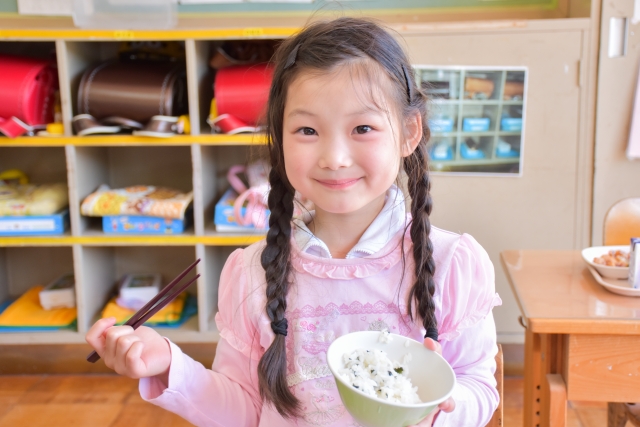
Japanese school lunch is closely connected with shokuiku (食育), often translated as “food education.” The term refers to learning about food, nutrition, eating habits, and the relationships between food, health, and society. Japan’s Basic Act on Shokuiku was enacted in 2005, giving food education a formal place in national policy.
A school lunch can support this learning in ordinary ways. Students may hear about a dish’s ingredients, learn where produce comes from, or discuss balanced eating. In some schools, nutrition professionals contribute to meal planning or education. Japan also has a system of licensed nutrition teachers, known as eiyō kyōyu (栄養教諭), although their presence and role can depend on the school and local staffing.
The shared routine can also teach practical habits: washing hands, handling serving utensils, taking a suitable portion, and cleaning up afterward. These habits are not unique to Japan, but kyūshoku gives schools a regular setting in which to practice them.
History of Japanese School Lunches
School lunches in Japan have developed over time rather than emerging as a single nationwide tradition. A frequently cited early example dates to 1889, when a school in Tsuruoka, in present-day Yamagata Prefecture, provided meals to children who needed support. Accounts commonly describe the food as simple, including rice balls and side dishes. This was an early local effort, not the beginning of a fully established national school-lunch system.
School meals became more widespread in the twentieth century, but provision was disrupted during the difficult years of war and its aftermath. In the postwar period, efforts to restart and expand school lunches were supported in part by food assistance. The School Lunch Act, enacted in 1954, established a legal framework for school lunch provision and its educational purpose.
The system has continued to change with shifts in food supply, nutrition policy, school organization, and local needs. Today’s menus and routines reflect those developments, but they are not identical to the meals served in earlier decades.
Costs, Kitchens, and Local Differences
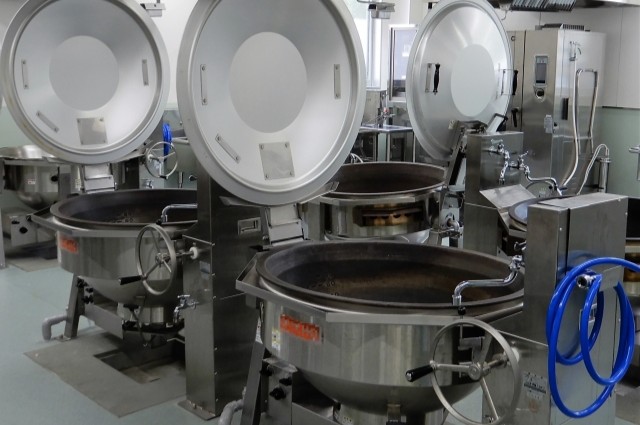
School lunches must be planned, prepared, transported, and served, and the arrangements vary. Some schools cook meals in their own kitchens; others receive food from a shared or centralized facility. Local governments and school authorities make decisions about operations, menus, and fees.
In many systems, families contribute toward the cost of ingredients, while public funds may cover other expenses such as staffing or facilities. The precise division depends on local policy. Some municipalities have introduced free school lunches or reduced fees for particular students or age groups, but this is not a single uniform arrangement across Japan. Families should check with their local school or municipal office for current rules.
Differences also reflect geography and infrastructure. A school in a farming area may have different opportunities to use local produce than an urban school. The size of the kitchen, the number of students, and the availability of staff can all affect how meals are prepared and delivered.
Customs and Useful Japanese Expressions
Before eating, students may say itadakimasu (いただきます). The phrase expresses appreciation for the meal and those involved in providing it; it is often translated as “I humbly receive.” After eating, they may say gochisōsama deshita (ごちそうさまでした), a polite expression of thanks for the meal.
These phrases are used in many settings beyond school, but they should not be treated as a strict rule followed identically by every person. In school, students may also be expected to handle dishes carefully, keep the classroom orderly, and follow the teacher’s instructions for serving and cleanup. The exact customs vary.
For readers unfamiliar with Japanese school life, one useful point is that lunch is generally a structured part of the day, not simply an open-ended break. The routine can combine eating with classroom responsibilities and, sometimes, lessons about food.
Frequently Asked Questions
Do all Japanese students eat school lunch?
No. Lunch arrangements vary by age, school, and municipality. Many elementary schools provide kyūshoku, while junior high and high school arrangements are less uniform. Some students bring bentō or use another option.
Is Japanese school lunch always traditional Japanese food?
No. Menus can include Japanese-style dishes as well as bread, noodles, stews, and meals influenced by other cuisines. Schools may also feature regional or seasonal ingredients. The mix varies by location and menu.
Do students have to finish every item?
Expectations differ. Some schools encourage students to take manageable portions and avoid waste, but policies and support for individual needs are not the same everywhere. Allergy, health, appetite, and other concerns should be discussed with the school.
Conclusion
Japanese school lunch culture combines food with the daily organization of school life. A meal may introduce students to seasonal ingredients, while the process of serving and cleaning up gives them shared responsibilities. The kyūshoku experience is not uniform: menus, costs, kitchens, and even whether lunch is provided depend on local and school-level arrangements. Still, the broader idea is easy to understand. Lunch can be both nourishment and an opportunity to learn about food, cooperation, and the people who make a meal possible. For anyone curious about Japanese education, looking closely at kyūshoku reveals how cultural values can take shape in an ordinary part of the school day.