In many Japanese homes, visitors pause at the entrance, remove their outdoor shoes, and step up onto a clean indoor floor. This custom is often explained as a way to keep dirt outside, but it also reflects how Japanese homes are organized and how people use different floor surfaces. A raised entrance called a genkan (玄関) makes the change from outdoors to indoors visible and practical. The habit is common, but it is not a rule followed in exactly the same way everywhere: expectations vary by home, building, and situation. Understanding why people remove their shoes—and how to do it politely—can make visiting a Japanese home, traditional inn, temple, or other shoe-free space much more comfortable.
The short answer: to keep outdoor shoes off indoor floors
The most direct reason is cleanliness. Shoes pick up dust, mud, moisture, and other debris as people walk outside. Removing them at the entrance helps keep these things off floors where people may sit, sleep, or walk in socks or bare feet.
That practical reason is especially clear in homes with tatami (畳), traditional floor mats made with a woven surface. Tatami is used as a floor, not simply as a rug to walk over in outdoor footwear. Shoes can bring in dirt and may damage or wear the surface. Many people also sit on floors, spread out bedding, or place low tables in rooms with tatami, so keeping the floor clean matters to everyday use.
Even in homes with modern wood, tile, or other flooring, taking off shoes provides a clear way to separate outdoor and indoor spaces. It can also help protect floors from wet soles and grit.
The genkan: a clear boundary between outside and inside
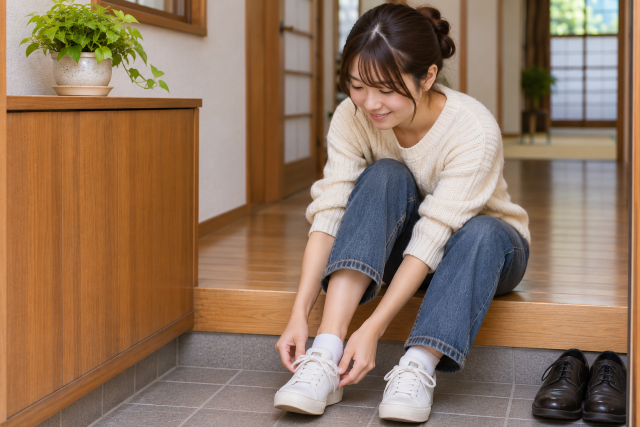
In many Japanese houses and apartments, the entrance area is called the genkan (玄関). It is usually lower than the main indoor floor. People remove their shoes in the lower area, then step up onto the raised floor in socks or indoor slippers.
This change in height helps mark where outdoor footwear should stop. It also gives people a place to leave shoes without carrying dirt farther inside. In some homes, there is a shoe cabinet or shelf; in others, shoes are lined up near the entrance.
The genkan is not just a feature of traditional houses. It is common in contemporary homes, too, although its size and design vary. A small apartment entrance may offer only a narrow place to take off shoes, while a larger house may have more room for storage.
Where should you stand?
If you are visiting, take your shoes off while standing in the lower entrance area, then step up onto the clean floor. Try not to place your socked or bare feet on the spot where outdoor shoes have been worn. If there is a step, it usually makes the boundary easy to see.
People often arrange their shoes neatly near the entrance, sometimes with the toes pointing toward the door. This is a considerate habit, but visitors do not need to worry about perfect alignment. If you are unsure where to leave your shoes, follow your host’s lead.
A practical fit for floor-based living

The custom also makes sense in rooms where people spend time close to the floor. In a tatami room, someone might sit on a cushion, lie down, or use a low table. In a modern home, people may still sit on the floor or move between rooms without wearing shoes.
This does not mean that every Japanese home is traditional or that people always sit on the floor. Many homes have chairs, sofas, and Western-style rooms. The point is that indoor floors can serve as living surfaces, so keeping them free of outdoor dirt is useful.
Tatami is one reason shoe removal is especially important in some spaces, but it is not the only reason. Clean floors are also easier to maintain, and indoor footwear can make it simpler to keep track of where outdoor shoes have been worn.
A custom shaped by architecture and daily habits
There is no single simple historical event that explains why people in Japan take off their shoes indoors. The practice is better understood as a habit shaped by practical needs and ways of using indoor space over time. The contrast between outdoor ground and indoor floors has been important in Japanese domestic life, while architectural features such as the genkan make that contrast part of the home’s layout.
Floor materials and room uses have changed, and modern Japanese buildings include many different styles. Still, the entrance boundary remains common because it is useful. The custom should not be treated as proof that one culture is uniquely clean or that every household follows the same routine. People in many parts of the world remove footwear indoors; the details depend on local customs, home design, and personal preference.
What to wear inside: socks, slippers, and indoor shoes
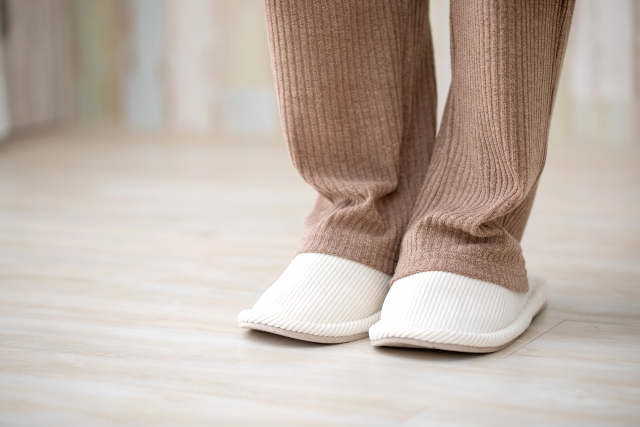
After removing outdoor shoes, you may be invited to wear slippers. These are often called surippa (スリッパ). Some homes provide them for guests, while others expect people to walk in socks or bare feet. It is fine to follow what your host does or asks you to do.
In schools and some workplaces, people may change into indoor shoes called uwabaki (上履き). These are separate from the shoes worn outside and are used in designated indoor areas. The practice is familiar in many schools, but arrangements differ between institutions.
Tatami rooms usually call for socks or bare feet
Slippers are generally taken off before stepping onto tatami. The woven surface is meant to be used without outdoor shoes, and slippers may be unsuitable for walking on it. If a room has tatami, look for slippers left outside the room or follow the people you are with.
If you are wearing socks, they should be clean and in good condition. There is no need to treat bare feet as automatically rude, but in a formal visit, clean socks are a safe and comfortable choice.
Toilet slippers are for the bathroom
Some homes and traditional accommodations keep a separate pair of slippers in the toilet area. These are meant to stay there rather than be worn around the rest of the house. If you see a pair by the toilet door, use them when entering if that appears to be the household’s practice, then leave them there when you come out.
It is easy to forget to change back, especially when you are a guest. A quick look at your feet before walking away can help.
Where else might you need to remove your shoes?
A shoe-free entrance is not limited to private homes. You may be asked to remove shoes in some traditional inns, temples, changing areas, and other buildings or rooms. Some restaurants also have shoe-removal areas, especially when diners sit on the floor or enter a raised seating space.
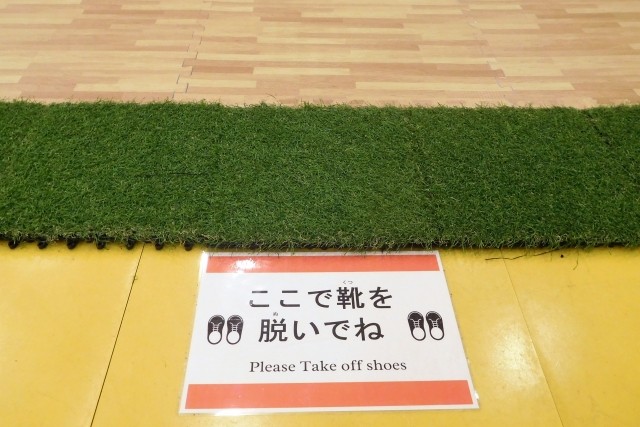
However, do not assume that every Japanese building requires this. Many shops, offices, restaurants, and public facilities allow outdoor shoes. Look for signs, shoe lockers, a step at the entrance, or a place where other visitors are changing footwear. If the arrangement is unclear, it is perfectly reasonable to ask.
At a temple or other cultural site, follow posted instructions and staff guidance. Different buildings may have different rules, and some areas may be open to outdoor shoes while others are not.
How to handle shoe removal politely as a visitor
A few simple habits will help you feel at ease:
- Notice the entrance. A raised floor, shoe rack, lockers, or a sign may indicate that outdoor shoes should come off.
- Follow your host’s instructions. Households differ, so the people who live there are the best guide.
- Avoid stepping on the indoor floor in outdoor shoes. Take them off in the entrance area before stepping up.
- Keep shoes tidy. Place them where indicated, rather than blocking the doorway.
- Check whether slippers are offered. Use them if appropriate, but remove them before entering a tatami room.
- Ask when uncertain. A simple question such as “Should I take off my shoes?” is polite and practical.
If you have a mobility need or a reason that makes removing shoes difficult, explain it. Customs are not a reason to ignore someone’s needs; a host or staff member may be able to suggest an alternative.
Common misunderstandings
“Everyone in Japan takes off their shoes everywhere indoors.”
No. Shoe removal is common in homes and in designated shoe-free areas, but many indoor spaces allow outdoor footwear. The entrance and signs matter more than assumptions about the country as a whole.
“Slippers can be worn in every room.”
Not necessarily. Slippers may be provided for general indoor use, but they are usually removed before entering tatami rooms. Separate toilet slippers, when present, should remain in the toilet area.
“The custom is only about religion or tradition.”
It can have cultural meaning, but everyday practicality is central. Keeping outdoor dirt away from floors and protecting surfaces are straightforward reasons for the habit. It is more accurate to see the custom as a combination of practical routines, home design, and social expectations than to attribute it to one cause alone.
FAQ
Should I bring indoor slippers when visiting a Japanese home?
Usually, you do not need to bring your own. A host may provide slippers, or may prefer that guests wear socks or walk barefoot. If you would feel more comfortable wearing slippers, ask first.
Is it rude to wear shoes inside a Japanese home?
If the household expects shoes to be removed, walking inside in outdoor shoes would generally be considered inconsiderate because it brings outdoor dirt onto the indoor floor. Follow the host’s instructions, and ask if you are unsure.
Can I wear socks in a tatami room?
Yes. Socks are commonly suitable for tatami, and bare feet may also be acceptable depending on the setting. Outdoor shoes and ordinary slippers are generally kept off the tatami.
Conclusion
Japanese people often take off their shoes indoors because it helps keep floors clean and protects surfaces such as tatami. The genkan, a lower entrance area found in many homes, makes the shift from outdoor shoes to indoor space easy to understand. Slippers, indoor shoes, and separate toilet slippers may also be part of the routine, though practices vary from one household or institution to another. For visitors, the most useful approach is simple: look for signs, observe what others do, and ask when in doubt. Rather than a complicated rule, shoe removal is a practical everyday custom that helps define how a particular space is used.