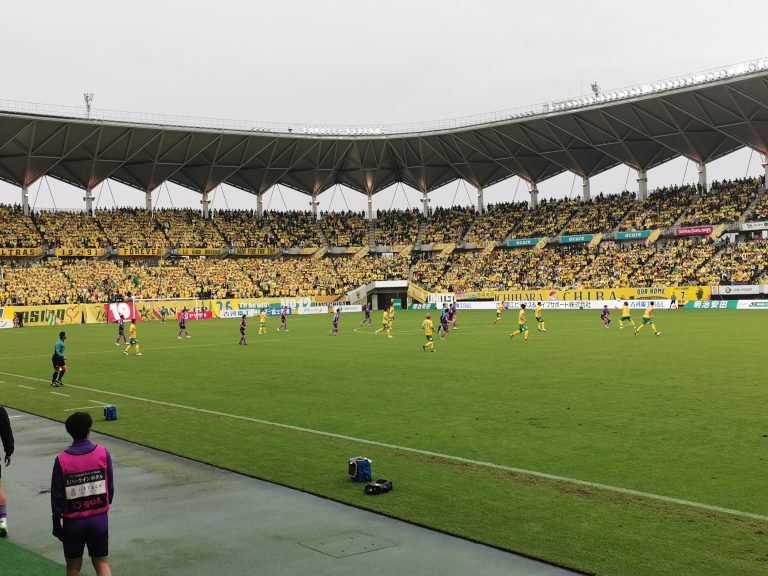
When you think of sports in Japan, Sumo, martial arts, or baseball might be the first things that come to mind. But if you want to talk about modern Japanese culture, you cannot ignore the J.League (Japan Professional Football League).
Launched in 1993, this professional soccer league holds significance far beyond just sports entertainment. It is a condensed representation of Japanese community spirit, discipline, and even food culture. Here is a guide for foreign travelers and residents on how to enjoy the J.League, complete with cultural context.
How the J.League Works: A Community-Based “Pyramid”
The J.League is organized into a pyramid structure with three divisions: J1 (the top category), J2, and J3. Just like in European leagues, there is a “promotion and relegation” system, creating dramatic storylines every year.
- Season: The season kicks off in late February and ends in early December (unlike the fall-spring system in Europe, it follows the calendar year).
- Key Feature: The biggest characteristic of the J.League is its focus on being “community-based.” Every team designates a specific city or region as its “hometown.” Unlike Japanese baseball teams which often carry corporate names, J.League team names are formed by “Region Name + Nickname” (e.g., Yokohama F. Marinos, Gamba Osaka).
“Supporter Culture” That Surprises the World
When you visit a J.League stadium, you will witness unique scenes that strongly reflect the Japanese national character.
Non-Stop Chants for 90 Minutes
The enthusiastic supporters who occupy the seats known as “Goal Behind” (the stands behind the goal) sing, jump, and clap continuously throughout the entire match. Their support is highly organized, moving in perfect synchronization under the direction of a leader. The sense of unity is breathtaking.
Post-Match “Garbage Picking”
The sight of Japanese fans cleaning up stadiums at the World Cup made headlines globally, but in the J.League, this is an everyday occurrence. After the match, supporters pick up not only their own trash but also the trash around them before heading home. The Japanese educational philosophy and spirit of “leaving a place cleaner than when you found it” are deeply rooted even in the stadium.
Safe and Friendly
J.League stadiums are among the safest in the world. Violent clashes or hooliganism are extremely rare, making it a safe environment for women and families with small children to enjoy the game.
The Stadium is a “Food” Theme Park
If you want to enjoy Japanese culture, you cannot miss “Staguru” (Stadium Gourmet). Food at Japanese stadiums goes far beyond just hot dogs and popcorn. Each stadium features stalls offering high-quality dishes made with local specialties.
- Kashima Stadium (Ibaraki): Famous for its charcoal-grilled “Motsuni” (stewed tripe/offal) and Ham-yaki (grilled ham).
- Regional Specialties: You can take a culinary tour of Japan just by visiting stadiums—Takoyaki in Osaka, fresh seafood in Hokkaido, or Ramen in Fukuoka.
- Craft Beer: An increasing number of clubs serve original craft beers in partnership with local breweries.
Regional “Mascots”
Japan has a massive “Yuru-chara” (mascot character) culture, and the J.League is no exception. Each team has a unique mascot that interacts with fans before the game. They are not just people in costumes; they are loved as members of the team, and they are so popular that a “Mascot General Election” is held every year.
Famous Japanese Players From the J.League
The league has produced many players who succeeded in Europe and on the national team:
- Hidetoshi Nakata – AS Roma
- Shinji Kagawa – Borussia Dortmund, Manchester United
- Keisuke Honda – AC Milan
- Takefusa Kubo – Real Sociedad
Many began their careers in J.League youth academies, which shows Japan’s strong focus on education and discipline in player development.
How International Fans Can Buy J.League Tickets
Purchasing tickets for concerts and events in Japan can often be a high hurdle for foreigners due to requirements like Japanese phone number verification or interfaces that are only in Japanese. However, the J.League has recently improved its system to welcome fans from overseas.
Here are the three main ways for tourists and residents to get tickets smoothly.
1. Most Recommended: Use the Official “J.LEAGUE TICKET” (International Version)
The J.League now has an official ticket sales website designed specifically for foreign tourists. This is the easiest and most reliable method.
- Site: J.LEAGUE TICKET (International Version)
- Pros:
- English Support: The entire site is in English.
- No Phone Number Required: You do not need a Japanese phone number to register.
- Credit Cards: Overseas credit cards are accepted.
- QR Tickets: No need to print or pick up tickets. Simply scan the QR code sent to your smartphone at the stadium gate to enter.
- Note: Not all clubs are supported on this version of the site (though many major clubs are).
2. Buy at Convenience Stores (Konbini)
You can purchase tickets at major convenience stores found throughout cities, such as Seven-Eleven, Lawson, and FamilyMart.
- Pros: You can pay with cash.
- Cons: The ticket machines inside the stores (such as Loppi or Multi-copy machines) almost always have interfaces only in Japanese.
- Tip: If you cannot read Japanese, you will need to ask the staff for help or use a translation app like Google Lens while operating the machine. After printing a receipt from the machine, you pay the fee at the register and receive a printed paper ticket.
3. Buy “Same-Day Tickets” at the Stadium
This method involves buying tickets directly at the stadium’s Box Office on the day of the match.
- Pros: No tedious registration is required, and cash is accepted.
- Risk: There is a risk of tickets being Sold Out. Same-day tickets are almost never available for popular teams (like the Urawa Reds), local rivalries (“Derby Matches”), or games that determine the championship. We strongly recommend checking ticket availability on the website beforehand.
*Important Advice: Avoid Resale Sites
While unofficial resale channels (such as “Ticket Ryutsu Center” or private transactions on social media) exist in Japan, they often lead to trouble and prices are frequently far higher than face value. Furthermore, you may be denied entry if you are caught using a resold ticket. Please be sure to use the Official Website or authorized sales channels.
Conclusion
The J.League is a place where the Japanese spirit of Omotenashi (hospitality), local pride, and enthusiastic passion intersect. Take a break from sightseeing to visit a stadium and experience “Japanese Soccer” mingled with the locals. You are sure to find a side of “Real Japan” there that you cannot experience at typical tourist spots.


コメント