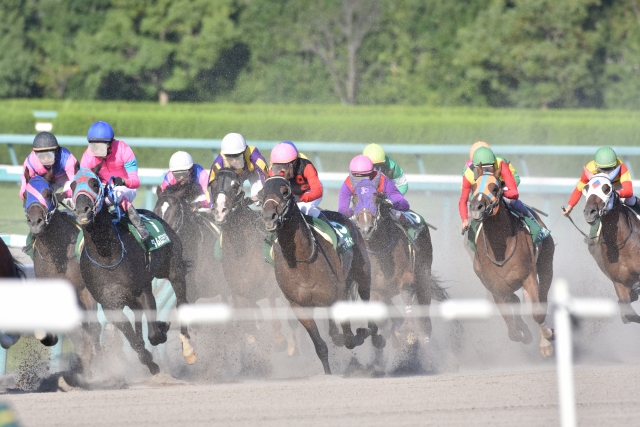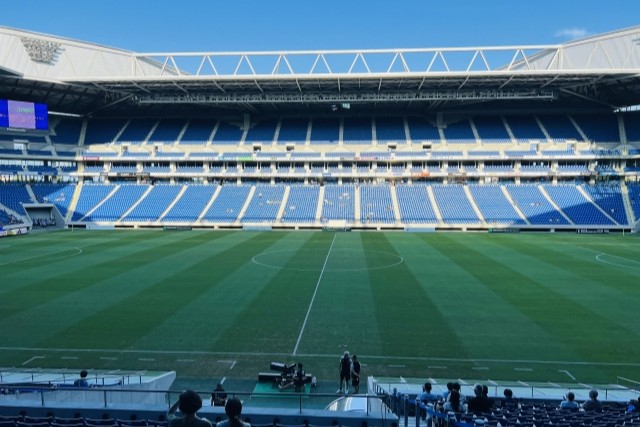
Japan’s largest football stadiums without running tracks put spectators close to the action, with stands built around a pitch rather than set back behind an athletics oval. The result is a different view of the game from a track-equipped arena—and a wide range of stadium styles, from immense national venues to compact city grounds. This ranking includes soccer-focused stadiums and venues shared with rugby, provided they have no permanent athletics track and regularly host significant football matches.
This ranking is based on J.League’s officially published match-admission capacities as of November 2026. These figures may differ from each stadium’s maximum seating capacity or the number of tickets available for a particular match.
What Counts as a Football Stadium Without a Running Track?
A soccer-specific stadium is designed primarily for soccer, often with stands close to the pitch. A ball-sports stadium may be designed for soccer and rugby, among other field sports, but still have no permanent athletics track. Both types can offer close views of the action.
Multi-purpose athletics stadiums are different: a running track separates the stands from the field. Nissan Stadium and MUFG Stadium (Japan National Stadium), for example, are excluded from this ranking despite their large capacities. Ajinomoto Stadium is also excluded because it has an athletics track, even though the track is normally covered with artificial turf during football matches. The focus here is on stadiums without an athletics track, rather than venues where a track is temporarily hidden.
Top 10 Largest Football Stadiums Without Running Tracks in Japan
The table ranks eligible stadiums by their published J.League match-admission capacity (入場可能数), rather than mixing match capacity with a venue’s maximum architectural seating figure.
| Rank | Stadium | City / Prefecture | Capacity | Main football club or use |
|---|---|---|---|---|
| 1 | Saitama Stadium 2002 | Saitama, Saitama | 62,040 | Urawa Red Diamonds |
| 2 | Toyota Stadium | Toyota, Aichi | 42,753 | Nagoya Grampus |
| 3 | Panasonic Stadium Suita | Suita, Osaka | 39,694 | Gamba Osaka |
| 4 | Mercari Stadium | Kashima, Ibaraki | 39,095 | Kashima Antlers |
| 5 | Edion Peace Wing Hiroshima | Hiroshima, Hiroshima | 28,413 | Sanfrecce Hiroshima |
| 6 | Noevir Stadium Kobe | Kobe, Hyogo | 27,974 | Vissel Kobe |
| 7 | YANMAR HANASAKA STADIUM | Osaka, Osaka | 24,481 | Cerezo Osaka |
| 8 | Best Denki Stadium | Fukuoka, Fukuoka | 21,546 | Avispa Fukuoka |
| 9 | Sanga Stadium by KYOCERA | Kameoka, Kyoto | 21,293 | Kyoto Sanga FC |
| 10 | PEACE STADIUM Connected by SoftBank | Nagasaki, Nagasaki | 20,268 | V-Varen Nagasaki |
Japan’s 10 Largest Track-Free Football Stadiums
No. 1 — Saitama Stadium 2002(Saitama City, Saitama Prefecture)
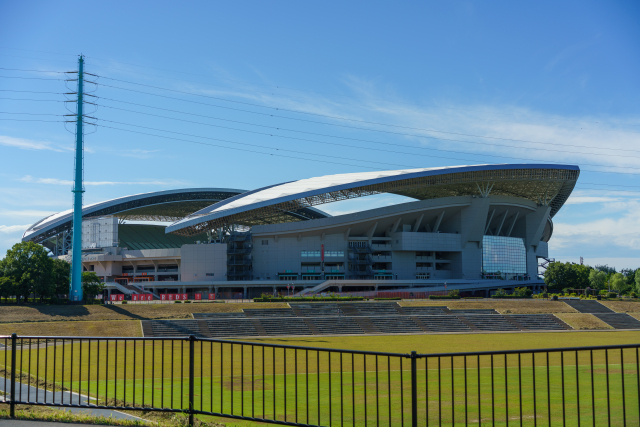
Location: Saitama City, Saitama Prefecture. Match capacity: 62,040. Opened: 2001. Use: Primarily football; home ground of Urawa Red Diamonds and a major Japan national-team venue. Built for the 2002 FIFA World Cup, the stadium hosted four matches, including a semifinal. Its large scale makes it one of Japan’s defining football venues, while its design keeps spectators focused on the pitch rather than an athletics track.
No. 2 — Toyota Stadium(Toyota City, Aichi Prefecture)
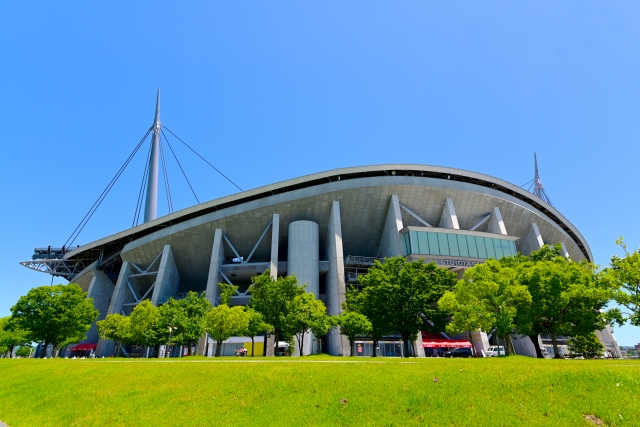
Location: Toyota City, Aichi Prefecture. Match capacity: 42,753. Opened: 2001. Use: A ball-sports venue used for football and rugby, including Nagoya Grampus home matches. Its steeply angled stands are a distinctive feature, helping bring spectators close to the field despite the stadium’s size. Toyota Stadium is also known internationally for hosting rugby, but its shared use does not make it an athletics stadium.
No. 3 — Panasonic Stadium Suita(Suita City, Osaka Prefecture)
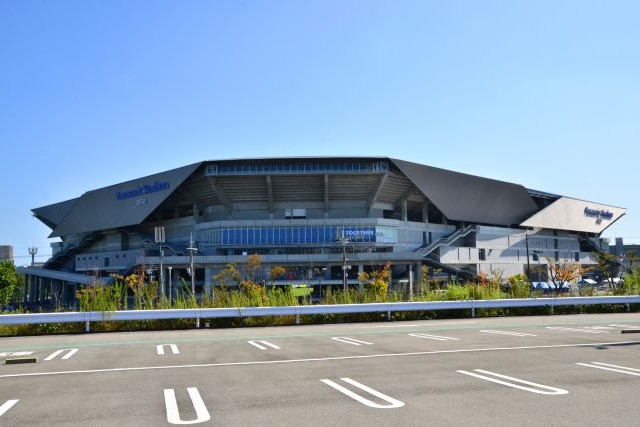
Location: Suita, Osaka Prefecture. Match capacity: 39,694. Opened: 2015. Use: Designed primarily for football and home to Gamba Osaka. The stadium’s modern, close-set seating provides a clear view of the pitch from around the ground. It also serves as a prominent venue in the Kansai region, where visitors can combine a league match with trips to Osaka and neighboring cities.
No. 4 — Mercari Stadium(Kashima City, Ibaraki Prefecture)
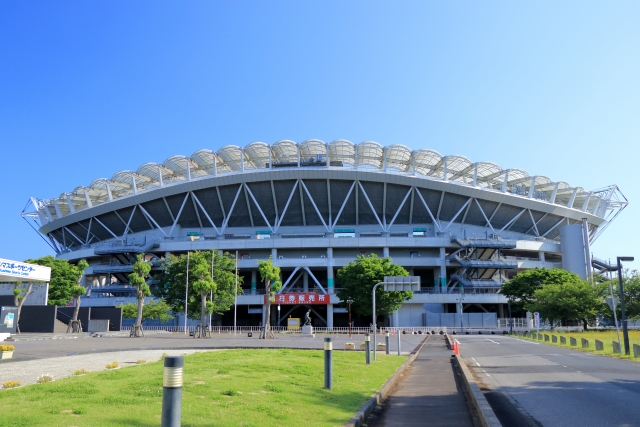
Location: Kashima, Ibaraki Prefecture. Match capacity: 39,095. Opened: 1993; expanded and redeveloped for the 2002 World Cup. Use: Soccer-specific, and home to Kashima Antlers. Formerly known as Kashima Soccer Stadium, it hosted 2002 World Cup matches. Its steep stands and strong association with one of Japan’s most successful clubs make it a major destination for domestic football supporters.
No. 5 — Edion Peace Wing Hiroshima(Hiroshima City, Hiroshima Prefecture)
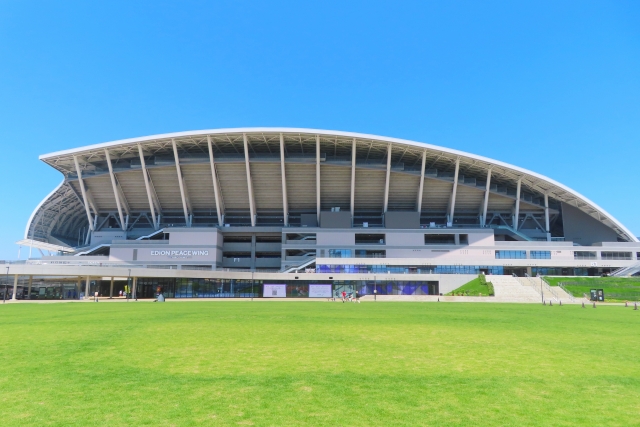
Location: Hiroshima City, Hiroshima Prefecture. Match capacity: 28,413. Opened: 2024. Use: A football-focused venue and home to Sanfrecce Hiroshima. Its central-city location distinguishes it from many stadiums on the list, which sit farther from their urban centers. As one of Japan’s newest major football grounds, it offers visitors a contemporary setting for a J.League match.
No. 6 — Noevir Stadium Kobe(Kobe City, Hyogo Prefecture)
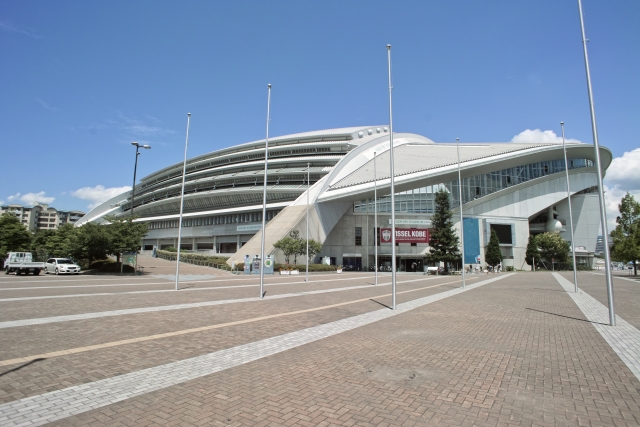
Location: Kobe, Hyogo Prefecture. Match capacity: 27,974. Opened: 2001. Use: A football and rugby venue, and home to Vissel Kobe. Previously known as Kobe Wing Stadium, it was among the venues used for the 2002 FIFA World Cup. Its enclosed design and retractable roof are notable features. Rugby use is part of the stadium’s identity, not a reason to exclude it from a track-free football ranking.
No. 7 — YANMAR HANASAKA STADIUM(Osaka City, Osaka Prefecture)
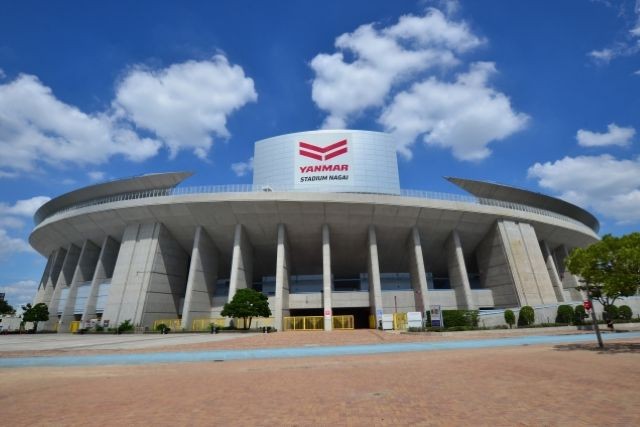
Location: Osaka City, Osaka Prefecture. Match capacity: 24,481. Opened: 1987; substantially redeveloped before reopening in 2021. Use: A football-focused venue used by Cerezo Osaka. Previously known as Kincho Stadium and later Yodoko Sakura Stadium, it is now Cerezo Osaka’s home ground. Its compact design brings supporters close to the pitch, offering a different matchday experience from Japan’s larger stadiums.
No. 8 — Best Denki Stadium(Fukuoka City, Fukuoka Prefecture)
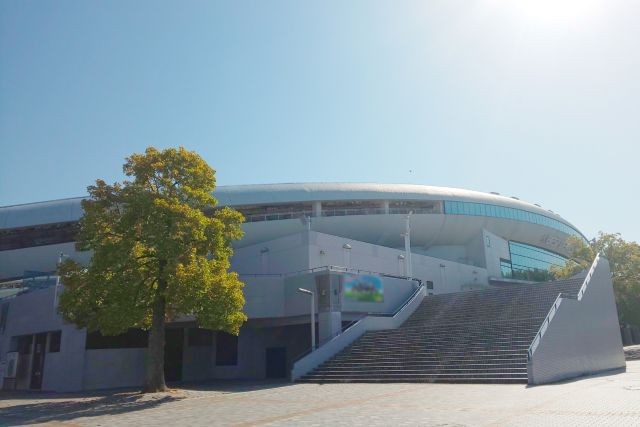
Location: Fukuoka, Fukuoka Prefecture. Match capacity: 21,546. Opened: 1995. Use: A ball-sports-specific stadium and home to Avispa Fukuoka. The venue also hosts rugby and American football, and its distinctive curved roof covers much of the seating. With no athletics track separating the stands from the pitch, it offers spectators a close view of the action.
No. 9 — Sanga Stadium by KYOCERA(Kameoka City, Kyoto Prefecture)
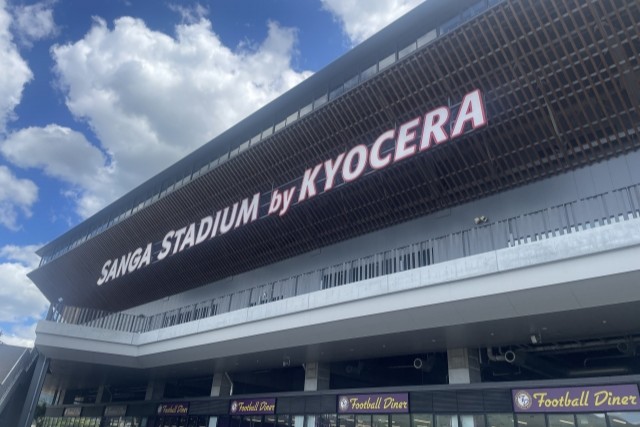
Location: Kameoka, Kyoto Prefecture. Match capacity: 21,293. Opened: 2020. Use: A football-specific stadium and home to Kyoto Sanga. The ground was built for football, without an athletics oval separating fans from the field. Its modern design and location in Kameoka make it a useful example of how J.League venues are not all located in the largest city of their prefecture.
No. 10 — PEACE STADIUM Connected by SoftBank(Nagasaki City, Nagasaki Prefecture)
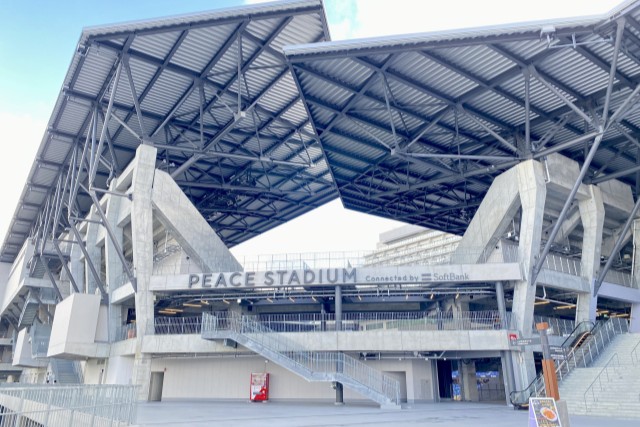
Location: Nagasaki City, Nagasaki Prefecture. Match capacity: 20,268. Opened: 2024. Use: A soccer-specific stadium and home to V-Varen Nagasaki. Located within Nagasaki Stadium City, the venue is part of a complex that also includes a hotel, arena, shops, and offices. Its stands are designed to bring spectators close to the pitch, creating an intimate matchday atmosphere in the heart of the city.
Soccer-Specific vs. Rugby-Compatible Stadiums
Not every track-free stadium in Japan is exclusively for soccer. Toyota Stadium is a clear example of a venue designed for ball sports and used for both football and rugby. Noevir Stadium Kobe also hosts both sports. Sharing a ground does not necessarily mean a distant view: without a permanent running track, spectators can still sit relatively close to the field.
This distinction matters when comparing stadiums. A football-specific ground may be tailored around the soccer pitch, while a rugby-compatible venue can serve multiple sporting communities and still meet the criteria for this list.
Famous Matches and Memorable Stadium Experiences
Saitama Stadium 2002 is closely tied to the 2002 FIFA World Cup, when it hosted four matches, including a semifinal. It remains a major venue for Urawa Red Diamonds and the Japan national team. Kashima’s stadium also hosted World Cup matches that year, while Noevir Stadium Kobe—then called Kobe Wing Stadium—was another tournament venue.
The 2002 World Cup final was held at Nissan Stadium, which is not included here because it has an athletics track. For visitors choosing a match, the stadium itself can be part of the appeal: the list includes grounds built for a global tournament, new urban venues, and long-established club homes.
Tips for Watching Football in Japan
Start with the official J.League schedule and the home club’s website. They provide match details, ticket information, stadium access guidance, and notices about seating or entry arrangements. Admission capacity is not a promise that tickets will be available; popular matches can sell out, so check early.
Read the seating plan before buying. Supporter sections may have specific team colors or cheering expectations, and rules can differ by club and stadium. Follow the venue’s instructions, use designated areas, and check what items are permitted.
For transportation, consult the stadium and club’s official access page before setting out. Directions and post-match arrangements vary, and major fixtures can mean busy trains or roads. Overseas visitors can buy tickets to many J.League matches, but sales methods and available language support vary by club. Use official sales channels where possible.
FAQ
What is the largest football stadium without a running track in Japan?
Saitama Stadium 2002 is Japan’s largest football stadium without a running track, with an official J.League match-admission capacity of 62,040. It is the home stadium of Urawa Red Diamonds and hosted a semifinal of the 2002 FIFA World Cup.
Is Toyota Stadium a soccer-specific stadium?
It is better described as a ball-sports venue used for both football and rugby. It has no permanent athletics track, so it qualifies for this ranking.
Why are Nissan Stadium, Japan National Stadium, and Ajinomoto Stadium excluded?
Nissan Stadium and Japan National Stadium have athletics tracks between the stands and the pitch. Ajinomoto Stadium also has an athletics track, although it is normally covered during football matches. Because this ranking excludes stadiums with athletics tracks, none of these venues qualifies.
Conclusion
Japan’s largest track-free football stadiums range from the immense Saitama Stadium 2002 to newer urban venues such as Edion Peace Wing Hiroshima. Some are designed mainly for soccer; others, including Toyota Stadium, also host rugby. What connects them is the absence of a permanent athletics track between spectators and the field, making them appealing destinations for football fans who value a direct view of the game. Before planning a visit, check the current stadium name, match-admission capacity, schedule, ticket availability, and transport information with the relevant club or venue.