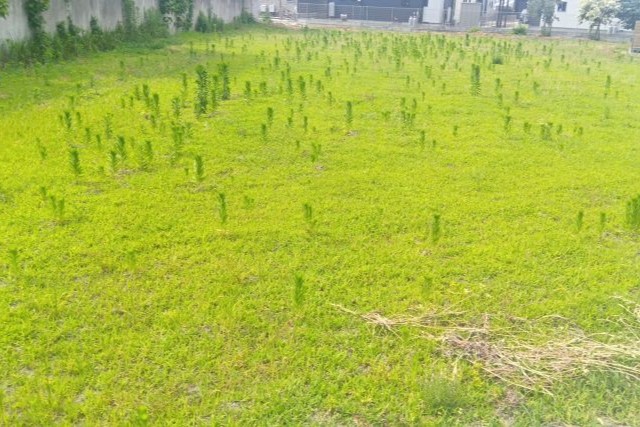
In Japanese internet slang, kusa (草) means “lol,” “that’s funny,” or simply “laughter.” The word literally means grass, but online it is used as a playful reaction to something amusing. You may see 草 on social media, in chat messages, or in gaming conversations, often by itself or alongside other slang.
The connection comes from an older way of typing laughter: www, with each w standing for 笑い (warai, “laughter”). A long string of ws can look like a patch of grass, which led people to call it kusa. The slang is casual and internet-oriented, so it is useful to understand—but not usually a good choice for formal writing or professional communication.
What Does Kusa Literally Mean?
The Japanese word 草 is read kusa and means “grass.” It can also refer to plants or vegetation more broadly, depending on the context. In ordinary Japanese, 草 is simply the name of the plant; the slang meaning comes from how the character is used online.
For example:
- 草 (kusa) — “lol,” “that’s funny”
- 草生える (kusa haeru) — literally “grass grows”; “I’m laughing” or “that’s hilarious”
- 大草原 (daisōgen) — literally “great grassland”; an exaggerated way to say something is extremely funny
The slang 草 is not usually an abbreviation of a longer word. It is a visual joke: written laughter came to resemble grass, and the word for grass became a shorthand reaction to something amusing.
How Did “Grass” Come to Mean “Lol”?
Japanese internet users have commonly represented laughter with w, connected to 笑い (warai, “laughter”) and 笑う (warau, “to laugh”). For instance, a person might add w at the end of a message to show that they are laughing or that the message is meant to be humorous. Repeating it—ww or www—can signal stronger laughter.
A row of repeated ws can look like blades of grass. From that resemblance came the slang 草. The expression 草生える, “grass grows,” extends the same image: the laughter is so strong that grass seems to be growing.
This explanation is widely used to describe the connection, though internet slang does not always have one clear inventor or a precisely documented starting point. It is safest to think of kusa as a community-grown online expression rather than a word created at a known moment by a single person.
Common Forms of Kusa
草 (kusa)
A single 草 is often posted as a short reaction to a joke, surprising mishap, or absurd comment. In English, it may work like “lol,” “that’s funny,” or “I can’t believe that.”
Example:
その間違い、草
Sono machigai, kusa.
“That mistake is hilarious.”
The exact tone depends on the conversation. It can express genuine amusement, but it may also sound teasing or sarcastic.
草生える (kusa haeru)
This phrase literally means “grass grows.” Online, it usually means that something is funny enough to make the writer laugh.
こんなところで寝てるの、草生える。
Konna tokoro de neteru no, kusa haeru.
“It’s so funny that they’re sleeping in a place like this.”
Like 草 by itself, 草生える is casual and conversational. You are more likely to encounter it in informal online exchanges than in polished writing.
大草原 (daisōgen)
大草原 means “great grassland” or “vast prairie.” In online slang, it intensifies the grass metaphor, suggesting a huge amount of laughter—roughly, “I’m dying laughing” or “that’s unbelievably funny.”
It is an expressive, playful choice rather than a neutral way to say that something is amusing.
www
You will still see w, ww, and www used to show laughter. The number of ws can suggest how amused the writer is, though there is no fixed scale. Some people use 草 instead; others use both. As with English “lol,” the letters may signal amusement without meaning that the person is literally laughing out loud.
Examples of Kusa in Online Messages
Here are a few examples to show how the slang works in context:
猫が自分のしっぽを追いかけてる。草。
Neko ga jibun no shippo o oikaketeru. Kusa.
“The cat is chasing its own tail. Lol.”
そこで転ぶのは草生える。
Soko de korobu no wa kusa haeru.
“Falling right there is hilarious.”
その説明、間違いだらけで大草原。
Sono setsumei, machigai darake de daisōgen.
“That explanation is full of mistakes—I’m laughing so hard.”
These translations are approximate. Online slang is highly dependent on tone, shared context, and the relationship between the people chatting. A brief 草 might be friendly, amused, or mocking; the surrounding message helps determine which.
When Is It Appropriate to Use Kusa?
草 belongs mainly to informal digital communication. You may encounter it in social media posts, comments, group chats, and gaming-related conversations. Whether it feels natural depends on the people and platform: not every Japanese speaker uses the same slang, and some may prefer other ways of showing amusement.
Use it cautiously if you are learning Japanese:
- With friends or in casual online chat: 草 may fit if the other person uses informal language.
- In a formal email, business message, or school assignment: Avoid it. It is slang, not a standard expression of professional politeness.
- With someone you do not know well: Consider a clearer, more neutral response. A bare 草 can come across as dismissive or as laughing at the person.
- When the topic is serious: Avoid it unless you are certain the other person is joking. Otherwise, it may seem insensitive.
For a neutral, everyday response, 面白い (omoshiroi, “interesting” or “funny”) is more broadly suitable. 笑った (waratta, “I laughed”) can also convey amusement, though it is still more casual than formal business language.
Is Kusa Spoken Aloud?
草 is most familiar as written internet slang. People may say kusa aloud, especially when talking about online culture or using slang jokingly, but it is not simply the standard spoken equivalent of “lol” in every conversation.
That distinction matters for learners: recognizing 草 in a comment is more important than trying to insert it into everyday speech. If you do use it aloud, the listener’s familiarity with internet slang and the situation will affect how natural it sounds.
Does Kusa Have Other Meanings?
Yes. Outside internet slang, 草 means grass or vegetation. The surrounding words make the intended meaning clear. A discussion about a lawn, a field, or plants will usually use the literal meaning; a one-character reaction below a joke is more likely to mean “lol.”
Some readers may also encounter 草 in discussions where it refers to cannabis or another specific subject. That meaning depends on context and should not be assumed from the character alone. When in doubt, look at the topic and the surrounding sentence rather than translating 草 automatically as laughter.
Frequently Asked Questions
Is kusa the same as “lol”?
Often, yes. As online slang, 草 can function like “lol” or “that’s funny.” It does not match English “lol” in every situation, though: depending on tone, it can also feel teasing, sarcastic, or dismissive.
What does “kusa haeru” mean?
草生える (kusa haeru) literally means “grass grows.” Online, it means that something is very funny or makes the writer laugh. It builds on the visual association between repeated ws and grass.
Can I use kusa with Japanese friends?
You can if the conversation is informal and your friends use similar slang. It is best to follow the tone of the group. Avoid using it in formal messages or when there is a risk that your reaction could sound like you are making fun of someone.
Conclusion
In Japanese internet slang, kusa (草) means “lol” or “that’s funny,” drawing on the visual resemblance between repeated ws for laughter and blades of grass. Related expressions include 草生える (“grass grows,” meaning something is very funny) and 大草原, an exaggerated image of a huge field of laughter. The slang is useful to recognize in online conversation, but its tone can range from friendly amusement to sarcasm. Treat it as informal, pay attention to context, and avoid it in professional or sensitive situations.