
When people think of Japanese food, they may imagine sushi, sashimi, wagyu beef, or traditional kaiseki cuisine. These foods are certainly an important part of Japanese food culture. However, these are also considered luxurious foods even by Japanese people. Of course, Japanese people do not eat them on a regular basis.
Japan also has a huge variety of inexpensive, casual foods that people eat as part of their everyday lives. These foods are often referred to as “B-class gourmet” (B-kyu gurume) in Japan.
In this article, we will introduce some popular examples of B-class gourmet and explain what makes them so familiar and appealing to people in Japan.
What Does “B-Class” Mean in Japan?
The term “B-class gourmet” does not simply mean food that is inferior to “A-class” food.
Rather, it is generally used to describe food that is relatively inexpensive, casual, filling, and familiar to ordinary people. Many B-class foods can be found at restaurants, food stands, shopping streets, festivals, and other everyday places.
The term became especially popular in Japan through local food events and competitions that promoted regional specialties. Today, people often use “B-class gourmet” more casually to describe affordable and satisfying foods that are deeply connected to everyday life.
Importantly, “B-class” does not necessarily mean “bad quality.” Some foods that are considered B-class gourmet can be extremely delicious and have devoted fans throughout Japan.
Here are some foods that are commonly associated with everyday Japanese food culture.
Karaage(唐揚げ)

Karaage is one of the most familiar foods in Japan. Although karaage can be made with various ingredients, chicken karaage is by far the most common type.
To make chicken karaage, pieces of chicken are usually marinated in ingredients such as soy sauce, sake, garlic, and ginger. They are then coated with potato starch or flour and deep-fried in oil.
One of the defining characteristics of karaage is its texture: the outside is crispy, while the inside remains juicy and tender.
Karaage is commonly eaten as a side dish with rice, but it is also a popular item in Japanese lunch boxes, izakaya restaurants, convenience stores, and supermarkets. You can find it in many different settings, from homemade meals to casual dining.
Another interesting aspect of karaage is that the seasoning can vary greatly from one household to another. Some people prefer a strong soy sauce and garlic flavor, while others prefer a simpler salt-based seasoning. Some people also squeeze lemon over their karaage or eat it with mayonnaise.
Karaage is also sold at specialized restaurants, and some regions have developed their own distinctive styles. Nakatsu Karaage and Usa Karaage, both from Oita Prefecture, are well-known examples.
Karaage is not simply inexpensive and easy to eat. It is also deeply connected to everyday Japanese food culture, appearing in home cooking, lunch boxes, casual restaurants, and prepared foods sold at stores.
For Japanese people, karaage is generally not something reserved for special occasions. It is one of the classic foods that can be enjoyed as part of an ordinary everyday meal.
Tonkatsu / Katsudon(豚カツ/カツ丼)
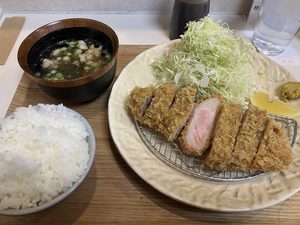
Tonkatsu is a Japanese-style breaded and deep-fried pork cutlet. A slice of pork is coated with flour, beaten egg, and breadcrumbs before being fried until crispy.
It is usually served with shredded cabbage and a thick, sweet-and-savory sauce called tonkatsu sauce. Some people also enjoy it with mustard.
Katsudon is another popular dish made with tonkatsu. The cutlet is placed on top of rice and cooked with onion and egg in a mildly sweet and savory sauce.
Katsudon is particularly popular among students and workers because it is filling and satisfying.
There is also a Japanese wordplay associated with katsudon. The word “katsu” sounds like the Japanese verb meaning “to win.” Because of this, some people eat katsudon before an important examination or competition as a kind of good-luck food.
Gyudon / Butadon(牛丼/豚丼)

Gyudon is a simple rice bowl topped with thinly sliced beef and onions cooked in a sweet-and-savory sauce.
It is one of the most familiar examples of Japanese fast food. Specialized gyudon restaurants are common throughout Japan, and customers can usually order a hot and filling meal at a relatively low price.
Butadon is a similar dish made with pork instead of beef.
Butadon is particularly associated with Obihiro in Hokkaido, where it has developed into a well-known local specialty.
Both gyudon and butadon are good examples of food that fits the image of B-class gourmet: inexpensive, quick, filling, and deeply familiar to ordinary Japanese people.
Japanese Curry Rice(カレーライス)
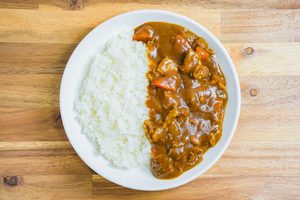
Japanese curry rice, or kare raisu, is another extremely popular everyday food.
Japanese curry developed under influences from Western-style curry and has evolved into a distinctive Japanese dish. Compared with many Indian curries, Japanese curry is generally thicker, milder, and often somewhat sweeter.
A typical plate consists of steamed rice covered with curry sauce. Potatoes, carrots, and onions are common ingredients, and meat such as pork, beef, or chicken may also be added.
There are countless variations of Japanese curry. Some people eat it at home, while others visit specialized curry restaurants.
Curry rice is so familiar that it is often considered one of Japan’s classic comfort foods.
Ramen(ラーメン)

Ramen is probably one of the most internationally famous Japanese foods.
Although ramen has its roots in Chinese-style noodles, it developed in Japan into a wide variety of unique styles. Today, different regions and restaurants have their own approaches to ramen.
Common soup styles include shoyu (soy sauce), miso, shio (salt), and tonkotsu (pork bone).
The toppings can include sliced pork called chashu, green onions, bamboo shoots, seaweed, boiled eggs, and many other ingredients.
Ramen can be found everywhere in Japan, from small independent shops to large restaurant chains. Prices and styles vary widely.
For many Japanese people, ramen is more than just a famous Japanese dish. It is an ordinary meal that they may eat after work, while traveling, or when they simply want something satisfying.
Yakisoba(焼きそば)

Yakisoba is a popular stir-fried noodle dish.
Despite its name, yakisoba does not normally use traditional soba noodles made from buckwheat. Instead, it usually uses wheat-based noodles that are stir-fried with ingredients such as pork, cabbage, carrots, and other vegetables.
A savory yakisoba sauce gives the dish its distinctive flavor.
Yakisoba is especially common at Japanese festivals and food stalls. It is also easy to prepare at home, making it a familiar part of everyday Japanese cooking.
Some regions have their own famous versions of yakisoba. Fujinomiya Yakisoba, for example, is a well-known local specialty from Shizuoka Prefecture.
Takoyaki(たこ焼き)

Takoyaki is a popular street food that originated in Osaka.
Small pieces of octopus are placed inside a round ball of wheat-flour batter, which is cooked in a special pan with round molds.
The finished takoyaki is usually topped with a sweet-and-savory sauce, mayonnaise, bonito flakes, and dried green seaweed.
Freshly cooked takoyaki is extremely hot inside, so people need to be careful when eating it.
Takoyaki is often sold at festivals, shopping streets, and specialized restaurants. It is inexpensive, fun to eat, and strongly associated with Osaka and casual Japanese food culture.
Okonomiyaki(お好み焼き)
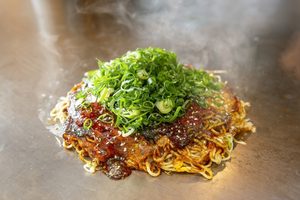
Okonomiyaki is another popular Japanese dish that is often associated with casual food.
The name comes from the words “okonomi,” meaning “what you like,” and “yaki,” meaning “grilled” or “cooked.”
A basic okonomiyaki is made by mixing ingredients such as cabbage with a wheat-flour batter and cooking it on a hot plate. Meat, seafood, cheese, and other ingredients can be added according to personal preference.
Two major styles are often associated with Osaka and Hiroshima.
In the Osaka style, the ingredients are generally mixed together before being cooked. In the Hiroshima style, the ingredients are layered, and noodles are often included.
Okonomiyaki is usually finished with a special sauce, mayonnaise, bonito flakes, and dried seaweed.
It is a casual food that can be enjoyed with friends or family, and some restaurants allow customers to cook it themselves at the table.
Japanese-Style Gyoza(焼き餃子)

Gyoza originated from Chinese dumplings, but Japan developed its own popular style of gyoza.
Japanese gyoza are commonly filled with ground pork, cabbage, Chinese chives, garlic, and other ingredients. They can be boiled, steamed, or deep-fried, but yaki-gyoza, or pan-fried gyoza, is particularly popular in Japan.
The dumplings are first pan-fried and then steamed, creating a crispy bottom and a juicy filling.
Gyoza are often served as a side dish with ramen or rice, although a plate of gyoza can also be a meal by itself.
The combination of ramen, gyoza, and rice is a familiar meal at many casual restaurants in Japan.
Conclusion
When people hear the phrase “Japanese food,” they may first think of sushi, sashimi, wagyu beef, or other famous dishes.
However, Japanese food culture is much broader than these internationally famous foods.
Tonkatsu, gyudon, curry rice, ramen, yakisoba, takoyaki, okonomiyaki, and gyoza are all foods that many Japanese people encounter in their everyday lives.
Not all of these foods would necessarily be classified strictly as “B-class gourmet,” and many of them can also be found in more expensive or sophisticated forms. Nevertheless, they share an important characteristic: they are familiar, accessible, satisfying foods that have become part of ordinary Japanese life.
If you want to understand what Japanese people actually eat in their daily lives, looking beyond sushi and other high-end Japanese cuisine is a great place to start.
These casual foods can tell you a lot about Japanese eating habits, regional food culture, and everyday life in Japan.

コメント