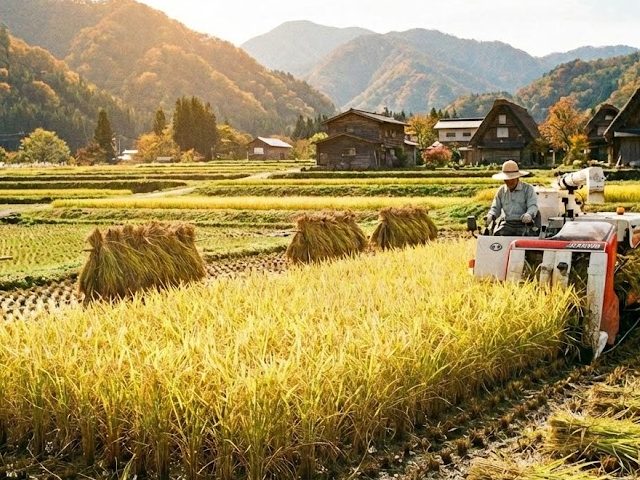
If you’ve been in Japan or following the news, you might have heard about the rising price of rice. For many countries, a staple food price increase is a serious matter, but in Japan, it’s particularly significant. It’s not just a matter of economics; it touches on culture, tradition, and daily life. Let’s explore why the price of rice is such a big deal in Japan.
Why Rice is More Than Just a Food in Japan
Rice (Kome in Japanese) is the foundation of Japanese cuisine and a symbol of its culture. It’s a staple food eaten at almost every meal, from a simple breakfast of rice and miso soup to an elaborate dinner. But its importance goes much deeper:
- A Symbol of Harmony and Life: For centuries, rice cultivation has been central to Japanese life. The cyclical nature of planting and harvesting, often done collectively, fostered a sense of community and harmony. Rice is not just food; it’s a blessing from nature.
- The Foundation of “Washoku”: “Washoku,” or traditional Japanese cuisine, was officially recognized by UNESCO as an Intangible Cultural Heritage. The core of this culinary tradition is steamed white rice, a symbol of simplicity and flavor that elevates other dishes.
- A Measure of Stability: For Japanese households, the price of a bag of rice has long been a key indicator of economic stability. A sudden price increase for this daily necessity is a direct hit to household budgets and a source of public concern.
The Reasons Behind the Price Surge: The “Reiwa Rice Riot”
The recent rise in prices has been dubbed the “Reiwa Kome Sodo” (令和の米騒動), or the “Reiwa Rice Riot,” a name that deliberately echoes historical events of public unrest over rice prices. This isn’t a simple case of supply and demand; it’s a complex issue with multiple factors.
1. The Impact of Climate Change
The most significant factor is the unpredictable weather. Japan’s record-breaking summer heat and droughts in the last year severely damaged rice crops. Rice plants are sensitive to heat, and the intense weather led to smaller harvests and lower-quality grains.
2. Rising Production Costs
Like in many countries, production costs for farmers have been rising. The prices of fertilizer, fuel, and other materials have increased, making it more expensive for farmers to grow rice. These costs are ultimately passed on to the consumer.
3. Declining Rice Production and Aging Farmers
For many years, the government encouraged a reduction in rice production to prevent a surplus. This policy, combined with a rapidly aging farming population, has led to a long-term decline in rice cultivation. With fewer young people taking up farming, the nation’s ability to produce its most important food is shrinking.
4. The End of a Cheap Era
Some experts argue that the price of Japanese rice has been artificially low for a long time. The recent price surge is a result of years of structural issues finally coming to a head, rather than a temporary problem.
What Does This Mean for the Future?
While the government has taken steps to release emergency rice stocks to stabilize the market, the long-term outlook remains a concern. This isn’t just a challenge for the economy; it’s a cultural challenge.
As a visitor or resident, you might notice that some restaurants or stores are starting to use different types of rice or even switch to imported rice. For many Japanese people, this change is not just about a higher grocery bill—it’s about the future of a beloved tradition and a core part of their identity.


コメント